Editorial
Hallway and stairs wallpaper ideas that last
- #advice
- #rooms
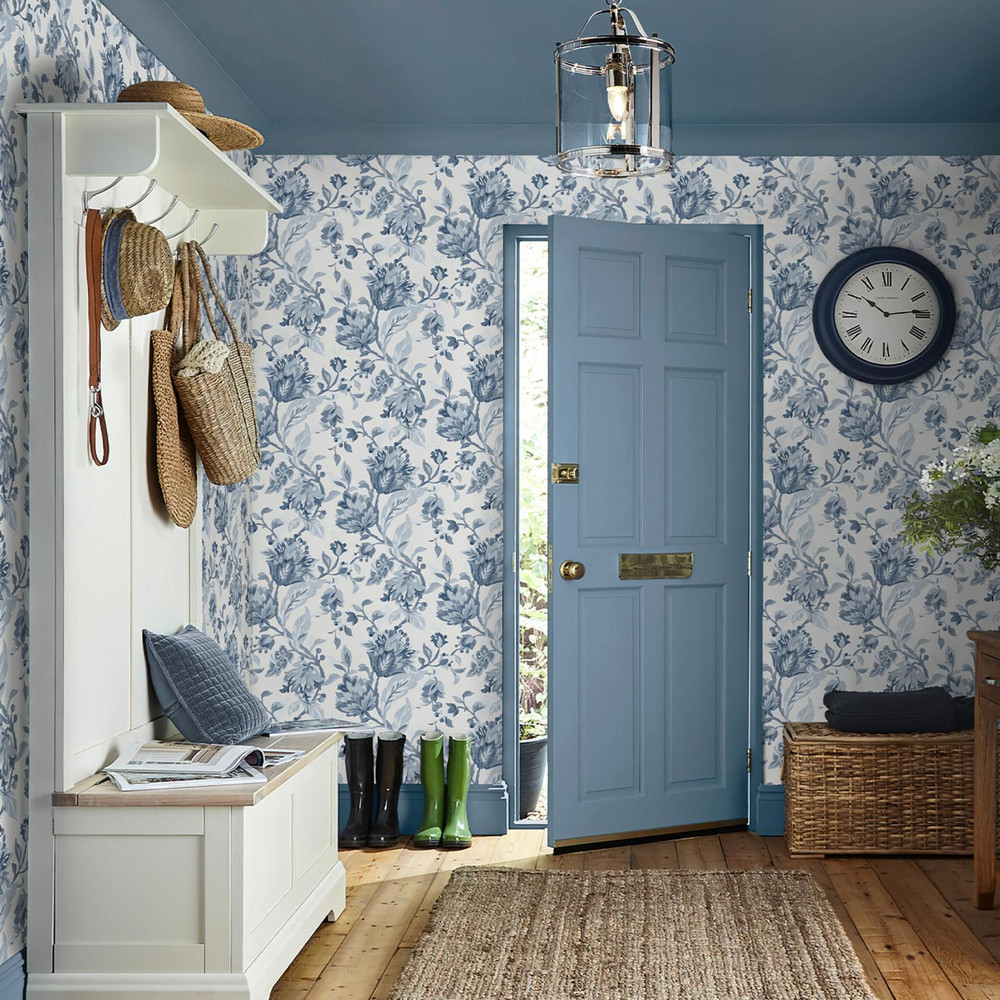
The hallway is the first thing anyone sees and the last place people think to decorate. It's also the hardest-working wall in the house. Bags scrape it, wet coats brush it, the dog shakes by it, and the stairs funnel every bit of traffic past the same three feet of plaster. So the question in a hall isn't only what looks good. It's what still looks good after a couple of winters. Get that right and the hallway becomes the room that sets the tone for the whole house. Here's how we'd approach it.
Start with the space you've actually got
Most halls are narrow, tall and short on natural light. That shapes the choice more than any trend does. A narrow hall doesn't want a huge, sprawling pattern, because you never get to stand back far enough to see it work. A tight repeat, a small geometric or a fine trailing floral reads better up close and doesn't fight the width. If the hall is dark, and most are, a warm ground does more for it than a cool one. Ochre, soft terracotta, a warm stone or a deep ink all give the space something the daylight isn't supplying. Look at how the design behaves on a whole wall in the room-set photos before you settle, because a pattern that looks busy on a phone screen often calms right down once it's up and lit.
Paper the top half, panel the bottom
The oldest trick in the hall is still the best one. Put timber panelling or a painted dado on the lower third of the wall, where the knocks land, and run the wallpaper above it. The panelling takes the scuffs and the bag scrapes, and the paper stays clean and looks after itself. It also breaks up a tall, thin wall into proportions that feel right, and it gives you a natural line to hang coats and mirrors against. If panelling feels like too much work, a simple painted dado rail at about a metre high does a lot of the same job for a fraction of the effort.
Choose a paper built for the wear
This is where the hall differs from a bedroom. A delicate uncoated paper in a busy hallway will show every mark within a season. What you want is a good-quality paste-the-wall paper, ideally one described as washable or scrubbable, so a wipe with a damp cloth takes the fingerprints off rather than driving them in. Non-woven papers are the easier pick here on two counts. They wear better, and when the day comes to redecorate they strip off the wall dry, in whole lengths, which matters a lot on a staircase you'd rather not be soaking. Check the washability rating on the product spec before you buy. It's the single most useful line for a hallway, and it's often overlooked.
Be honest about the stairwell
The stairs are the part people underestimate. Hanging paper down a stairwell means working off a stepladder or a proper scaffold board across the stairs, with drops that can run three or four metres on the tall wall over the return. The paper has to hang plumb, and stairs are rarely square, so the pattern needs handling with care where it meets the skirting on the rake. If you're a confident decorator, a paste-the-wall paper with a forgiving small repeat is the sensible choice, because you can reposition it on the wall while it's still dry. If the stairwell is tall or the drop over the stairs is a long one, this is the job most worth handing to a decorator. It's not the paper that's hard. It's the height.
Looks that work in a hall
A small geometric or a fine stripe. Both suit a narrow space, both read as smart rather than busy, and a vertical stripe adds height to a low hall. See the geometric range at /products?category=style-geometric.
A trailing floral above panelling. The classic hallway. The panelling grounds it and the pattern lifts the light. Cath Kidston and Laura Ashley florals sit right at home here.
A deep ink or oxblood on the whole stairwell. A dark hall sounds risky and usually isn't, because you pass through it rather than sit in it, so the drama earns its keep without wearing you out.
A textured or grasscloth-effect paper. Adds warmth and hides an uneven old wall, which halls in older Beverley houses tend to have.
Measure the awkward bits before you order
Halls and stairs eat more paper than a plain room of the same wall area, because the cuts around the string of the stairs, the newel post and the doors all leave offcuts you can't use elsewhere. Add a roll to whatever a straight calculation gives you, and buy it all in one go so the batch numbers match. A hall is exactly the place a mismatched batch shows, because the long unbroken drop over the stairs puts two lengths side by side in full view. When you're weighing up a design, check its pattern-repeat figure on the wallpaper range, because a large repeat means more waste on a tall stairwell and changes how many rolls you need. Get the paper right for the wear, get the batch right, and the hallway stops being the room you apologise for and starts being the one that makes the rest of the house look considered.