Editorial
Living room wallpaper ideas that work in a real room
- #advice
- #rooms
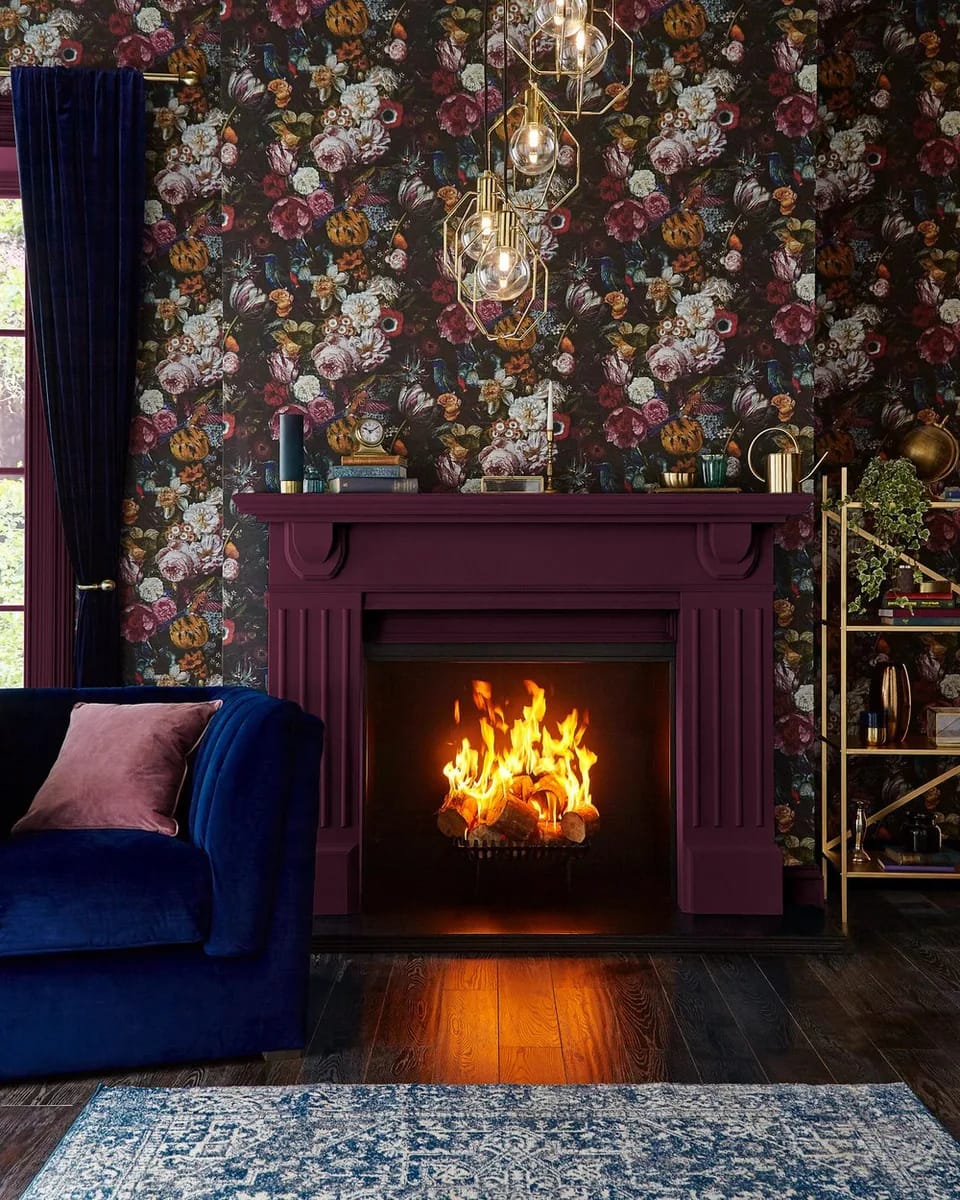
The living room is the hardest room in the house to paper, and not because the walls are difficult. It is because the room is already full. A sofa against one wall, a television on another, a radiator under the window, a chimney breast that sticks out 30cm and refuses to be ignored. Choose a paper for an empty room and you will hang it in a full one. So here is the advice with the furniture left in.
Start with the wall you actually look at
Sit where you sit. Not in the doorway, where the estate agent photographs it, but in your usual seat with a cup of tea. The wall in front of you is the one that earns the pattern. Nine times out of ten in a British sitting room that is the chimney breast, or the wall the sofa faces. The wall behind the sofa is the one you never see, and papering it is the most common wasted roll we hear about.
This sounds obvious. It is routinely ignored. People paper the biggest wall because it is the biggest, then spend three years looking at the plain one opposite.
One wall or all four
The honest answer is that it depends on the scale of the pattern, not on fashion. A big, dark, high-contrast design wants one wall and three quiet ones. A small, low-contrast design can go round the whole room without closing it in, and often looks better for it, because a single papered wall with a small print can read as an accident rather than a decision.
A rough rule that has served us well:
Motif bigger than a side plate, or a dark ground: one wall.
Motif smaller than a coaster, or tone-on-tone: all four walls.
Anywhere in between: paper the chimney breast and the two alcoves either side, and leave the rest.
The statement wall, done properly
If you are going to give a wall over to a big design, commit to it. Half-hearted feature walls are the ones that get stripped after two years. Graham & Brown's Allure is a fair example of the register: a heritage floral on a black ground, 64cm repeat, offset match, paste-the-wall, spongeable, on a 0.52m by 10m roll at £95. That is not a paper you sneak in. It is one you build a room around, with a warm lamp on either side and nothing else on the wall.
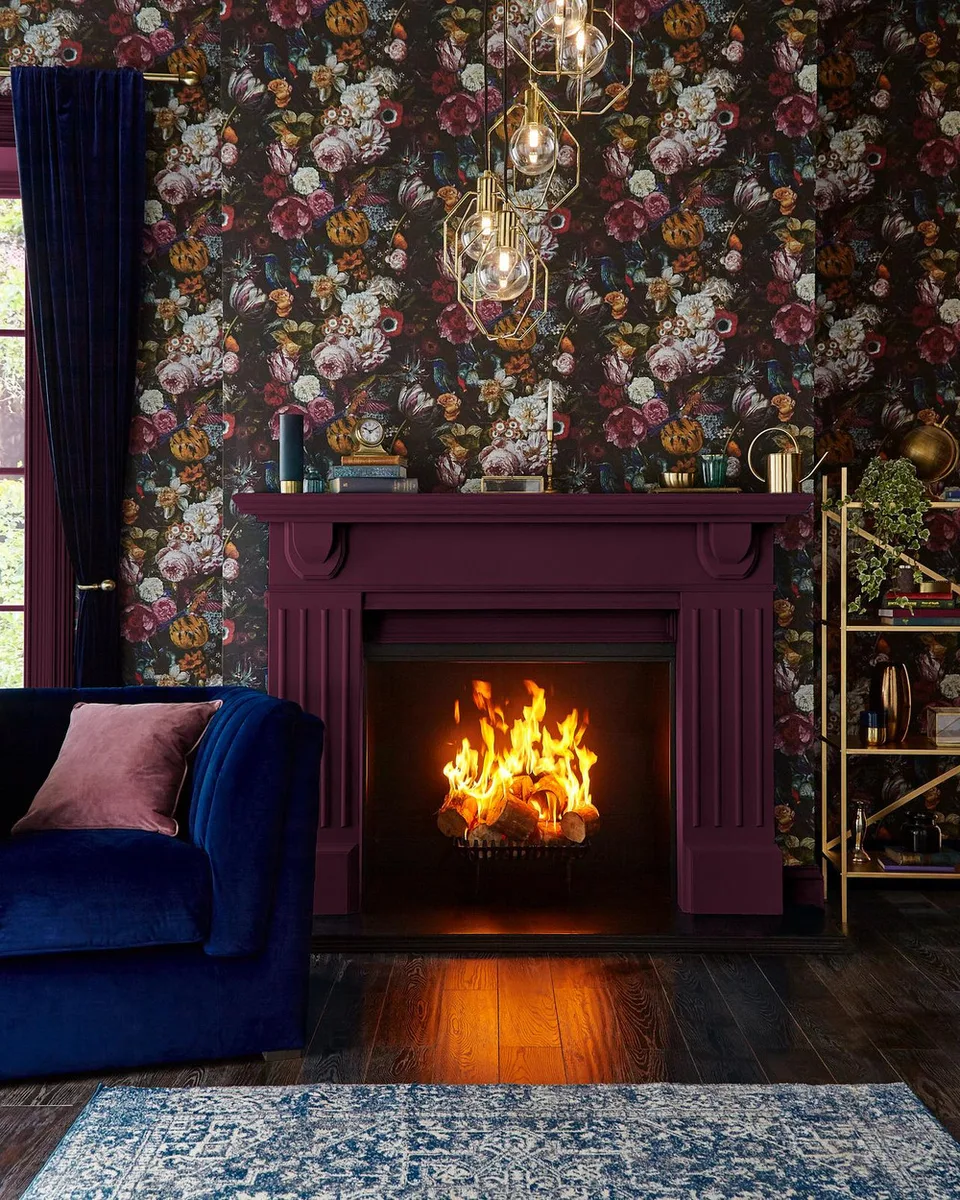
The practical catch with dark statement papers is the join. On a black or navy ground, a seam that would vanish on a cream paper shows as a pale hairline, because the edge of the paper is white. Roll the seams properly and keep the paste off the face. If the wall runs behind a radiator, our guide to papering behind a radiator without taking it off covers the cheat that keeps the pattern reading.
Quiet pattern for the whole room
The other route, and the one that ages best in a room you sit in every evening, is a small pattern round all four walls. Laura Ashley's Annecy Dove Grey is the type: a small-scale damask with a 21.33cm repeat and a straight match, spongeable, paste-the-wall, £52 for a 0.52m by 10m roll. From the sofa it reads as texture. From arm's length it resolves into a pattern. That is exactly what you want from a paper you live with, and the short repeat means less waste and an easier hang.
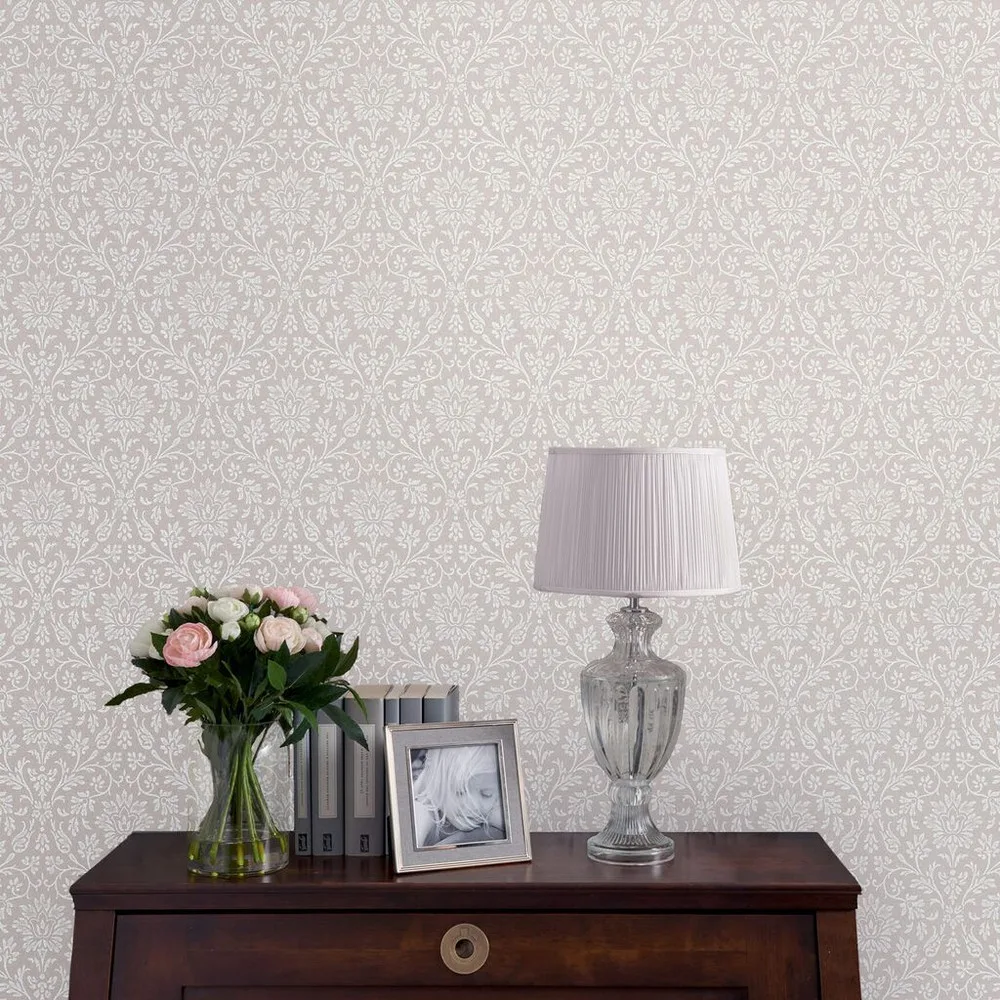
If that is the direction, the damask papers and the geometrics are the two shelves worth browsing first. Laura Ashley's Burnham Fern sits between them: a leaf trellis drawn from the archive, 64cm repeat, offset match, spongeable, £52 a roll.
Sheen, lamps and the evening test
A living room is used after dark more than any other room in the house, and most people choose wallpaper on a Saturday morning. Metallic and mica papers behave differently under a lamp. Graham & Brown's Art Deco in black and gold, 64cm repeat, straight match, 0.53m by 10m at £110, is a paper that mostly does its work in the evening: the gold silhouettes catch lamplight and go flat under a grey afternoon.
So think about your lighting before your pattern. Two or three warm lamps at different heights will do more for a paper than one bright ceiling fitting. If the room faces north and stays cool all day, our piece on choosing wallpaper for a north-facing room goes into which grounds hold their warmth.
Alcoves, chimney breasts and where the pattern breaks
Papering the alcoves either side of a chimney breast and leaving the breast itself painted is a good trick in a small sitting room. It pushes the recesses back and lets the fireplace stand forward, and it means two narrow drops rather than a full wall, which keeps a pricier paper affordable.
Do plan where the pattern lands. Centre the design on the chimney breast if you paper it, and let the cuts fall in the corners. A shelf or a television bracket will interrupt a large motif in a way that a small one survives.
Big repeats cost more paper than you think
Pattern repeat is the figure people skip and then regret. Every drop of a straight-match paper has to start at the same point in the design, so the offcut at the bottom of each drop is wasted. The bigger the repeat, the bigger the waste. Graham & Brown's Clavering Birds has a 100cm repeat with an offset match. On a standard 2.4m wall that can mean losing most of a metre per drop, which is a whole extra roll on a modest chimney breast.
It is not a reason to avoid a big design. It is a reason to measure honestly and order in one go, so the rolls come from the same batch and the colour matches across the wall. Our guide to how much wallpaper you need does the arithmetic with the repeat included.
Before you order
Sit down in your usual seat and decide which wall you look at.
Check the pattern repeat and match type on the product page before you count rolls.
Check the paste type. Almost everything we sell is paste-the-wall, which is the easier hang round a chimney breast, and the difference between the two methods matters more than people expect.
Order all the rolls together, from one batch.
Look at the design under a lamp as well as in daylight.
Every design in the wallpaper collection lists its repeat, match type and paste method, with large detail shots and room-set photos so you can judge the scale against your own furniture before you commit a single roll. Start there, sitting down, looking at the wall you actually look at.